
Is Buying Gold-Plated Jewellery Worth It? A Complete Guide
Gold jewellery has always been associated with elegance, luxury, and timeless style. However, as the price of solid gold continues to make traditional gold jewellery more expensive, many shoppers are turning to a more affordable alternative: gold-plated jewellery.
But is gold-plated jewellery actually worth buying? Does it offer good value for money, or does it simply look like gold without providing the same benefits?
The answer depends on what you expect from your jewellery. For fashion, variety, and affordability, gold-plated pieces can be an excellent choice. For long-term durability, resale value, or investment, solid gold is usually the better option.
What Is Gold-Plated Jewellery?
Gold-plated jewellery is made by covering a base metal, such as brass, copper, stainless steel, or silver, with a thin layer of real gold.
Unlike solid gold jewellery, the majority of the piece is not made from gold. Instead, gold is applied to the surface to create the appearance and finish of genuine gold jewellery.
The thickness of the gold layer can vary considerably. Generally, a thicker plating will last longer and be more resistant to everyday wear.
It is also important to distinguish gold plating from other types of gold jewellery, including gold vermeil and gold-filled jewellery, as these products use different amounts and methods of applying gold.
Why Is Gold-Plated Jewellery So Popular?
One of the biggest advantages of gold-plated jewellery is its price.
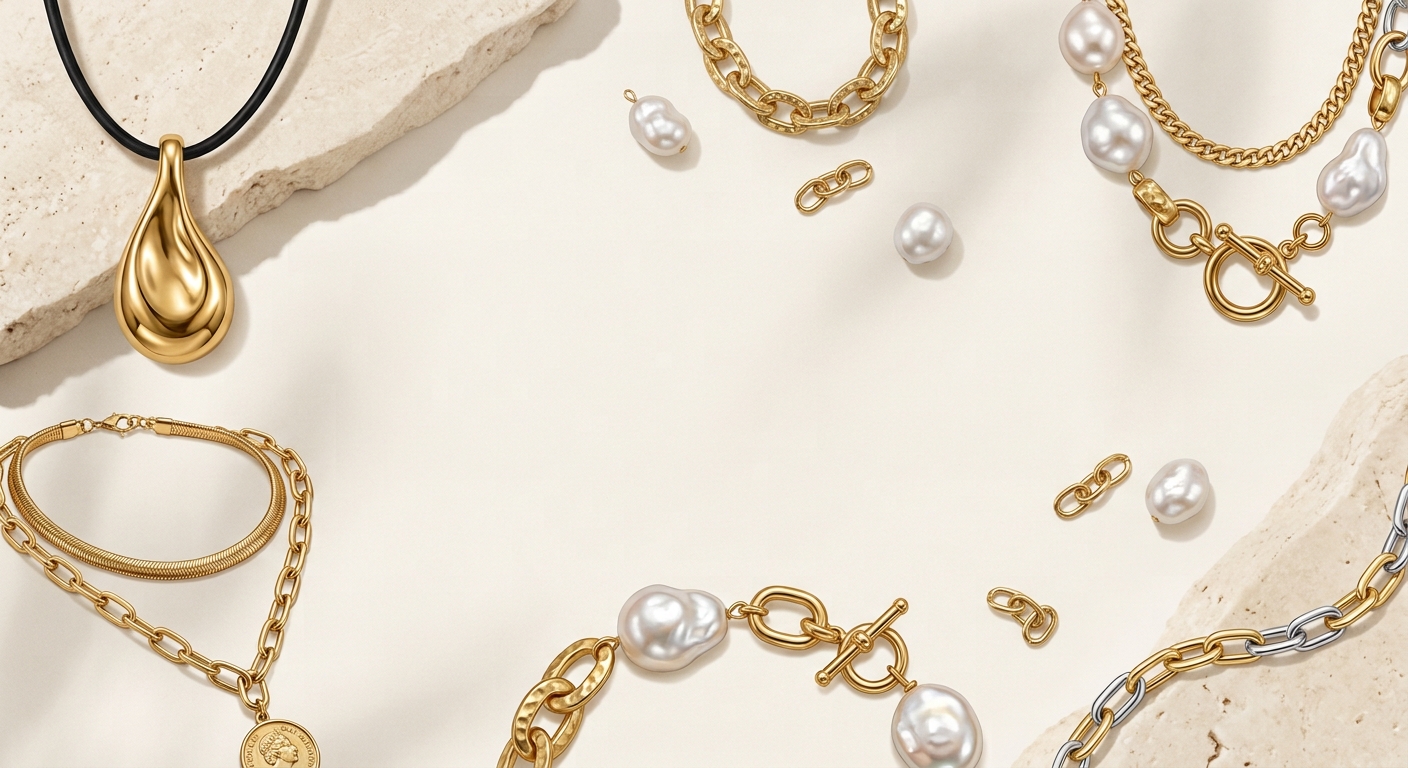
A gold-plated necklace, bracelet, ring, or pair of earrings can provide the luxurious appearance of gold without the significantly higher cost associated with solid gold. This makes it particularly attractive to people who want to experiment with different jewellery styles without making a major financial commitment.
Gold-plated jewellery also allows consumers to own more pieces. Instead of spending a large amount on one solid-gold necklace, for example, the same budget could potentially purchase several different plated pieces.
This makes gold plating especially popular for:
- Fashion jewellery
- Trend-driven designs
- Statement pieces
- Seasonal accessories
- Gifts
- Everyday styles where affordability is important
The Main Advantages of Gold-Plated Jewellery
1. It Is Much More Affordable
The biggest benefit is simple: gold-plated jewellery costs significantly less than solid gold.
Since only the outer layer contains gold, manufacturers can create attractive jewellery designs while keeping prices accessible.
This makes plated jewellery an appealing option for shoppers who want the look of gold without paying for the weight and value of a solid-gold piece.
2. You Can Experiment With More Styles
Fashion trends change quickly. A style that is popular today may look completely different next year.
Buying affordable gold-plated jewellery gives you the flexibility to experiment with trends without spending a substantial amount on every new piece.
You can choose different necklaces, rings, earrings, and bracelets and rotate them depending on your outfit or occasion.
3. It Can Look Very Similar to Solid Gold
High-quality gold-plated jewellery can look remarkably similar to solid gold, especially when it is new and well maintained.
For someone primarily interested in appearance rather than precious-metal value, this can make gold plating a very practical option.
4. It Can Be a Good Choice for Occasional Wear
Jewellery that is only worn occasionally may not need the same durability as a piece intended to be worn every day.
A gold-plated statement necklace or pair of earrings, for example, can be a cost-effective way to complete an outfit for weddings, parties, dinners, or special events.
The Disadvantages of Gold-Plated Jewellery
Although gold-plated jewellery has plenty of advantages, it also comes with important limitations.
1. The Gold Layer Can Wear Away
The biggest drawback is that the gold plating is not permanent.
Over time, friction, sweat, water, chemicals, and everyday use can cause the gold layer to become thinner or wear away completely. Rings and bracelets can be especially vulnerable because they experience frequent contact with surfaces.
Once the plating wears away, the base metal underneath can become visible.
2. It Has Little Investment Value
This is one of the most important differences between gold-plated and solid-gold jewellery.
Gold-plated jewellery generally should not be considered a gold investment.
The amount of gold used in the plating is typically very small, so the piece’s resale value is not comparable to that of solid gold jewellery.
When you purchase solid gold, you are paying for an item containing a meaningful quantity of a precious metal. When you purchase gold plating, you are primarily paying for the design, craftsmanship, branding, and appearance.
3. It Requires More Care
Gold-plated jewellery generally needs more careful handling than solid gold.
Frequent exposure to perfumes, lotions, cleaning products, chlorine, and moisture can accelerate deterioration of the plating.
For this reason, removing plated jewellery before showering, swimming, exercising, or applying perfumes can help extend its lifespan.
4. Quality Can Vary Significantly
Not all gold-plated jewellery is made to the same standard.
Two pieces may both be advertised as “gold plated” but have very different plating thicknesses, base metals, manufacturing quality, and durability.
This is why the lowest price is not always the best deal.
How Long Does Gold-Plated Jewellery Last?
There is no single lifespan for gold-plated jewellery.
A high-quality, well-maintained piece may retain its appearance for a long time, particularly when worn occasionally. Jewellery that is worn daily, exposed to moisture and chemicals, or constantly exposed to friction may show signs of wear much sooner.
The lifespan depends on several factors, including:
Plating thickness: Thicker gold plating generally offers greater durability.
Frequency of use: Daily wear causes more friction than occasional use.
Location of the jewellery: Rings and bracelets usually experience more physical contact than earrings or pendants.
Chemical exposure: Perfumes, lotions, chlorine, and household chemicals can affect the finish.
Care and storage: Proper cleaning and storage can help preserve the plating.
Gold-Plated vs. Solid Gold: Which Is Better?
The right choice depends entirely on your goal.
| Feature | Gold-Plated Jewellery | Solid Gold Jewellery |
|---|---|---|
| Price | Affordable | More expensive |
| Appearance | Gold appearance | Genuine gold throughout |
| Durability | Depends on plating and use | Generally very durable |
| Resale value | Generally low | Generally higher |
| Investment potential | Very limited | Can hold precious-metal value |
| Style variety | Excellent | Excellent |
| Maintenance | Requires more care | Generally easier to maintain |
| Best for | Fashion and occasional wear | Long-term ownership |
If your primary goal is fashion and affordability, gold plating can be an excellent option.
If your goal is long-term value, durability, inheritance, or investment, solid gold is generally more suitable.
Is Gold-Plated Jewellery Worth Buying?
For many people, the answer is yes.
Gold-plated jewellery can absolutely be worth buying when you understand what you are purchasing.
It is not a substitute for solid gold when it comes to investment or precious-metal value. However, it can offer excellent value as a fashion accessory, especially when the design is attractive and the piece is well made.
Think of it this way: you’re buying the look and design of gold, rather than purchasing a significant quantity of gold itself.
That distinction makes all the difference.
How to Get the Most Out of Your Gold-Plated Jewellery
If you decide to buy gold-plated jewellery, a few simple habits can help preserve its appearance.
Keep your jewellery away from water, perfumes, creams, and harsh chemicals whenever possible. Remove pieces before swimming, showering, exercising, or sleeping.
Store each item in a dry environment and, ideally, keep individual pieces separated to reduce scratching and friction.
When cleaning gold-plated jewellery, avoid aggressive polishing. A soft, dry or slightly damp cloth is generally a safer approach, depending on the manufacturer’s care instructions.
Most importantly, purchase from a reputable jewellery retailer and ask about the plating quality, base metal, and care instructions before buying.
What Should You Look for When Buying Gold-Plated Jewellery?
Before making a purchase, consider more than just the colour and price.
Look at the quality of the craftsmanship, the reputation of the jewellery brand, the type of base metal used, and any information provided about the gold plating.
It’s also worth checking whether the jewellery is designed for everyday wear or occasional use.
A beautifully designed piece from a reputable jewellery company may offer much better value than an extremely cheap plated item that begins losing its finish after only a few uses.
The Bottom Line: Buy for Beauty, Not Gold Value
Gold-plated jewellery can be a smart purchase when your priority is style, affordability, and versatility.
It gives shoppers the opportunity to enjoy gold’s distinctive appearance while spending considerably less than they would on solid gold. However, its limited durability and lack of meaningful gold resale value mean it should not be viewed as an investment in the same way as solid gold jewellery.
Ultimately, the best choice comes down to what you want from your jewellery.
For trendy pieces, special occasions, and affordable everyday fashion, gold plating can be well worth the money. For jewellery you want to keep for decades, pass down to future generations, or potentially sell for its precious-metal value, solid gold remains the stronger choice.
The smartest jewellery purchase isn’t always the most expensive one — it’s the one that matches your purpose, budget, and expectations.
View Abdullah Sakkijha Jewelry’s latest collections and pieces: https://abdullahsakkijha.com/
Visit us: Swefieh, Al-Hamra Street – Amman, Jordan
Follow us on our socials:
Instagram | Facebook |Snapchat | TikTok | YouTube


Add comment