
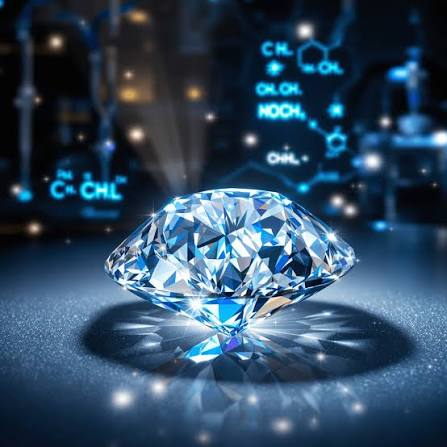
What’s Happening With Diamond Prices Globally in 2026?
The global diamond market is going through one of its most significant transformations in decades. After several years of declining prices, excessive inventory and growing competition from laboratory-grown diamonds, the market is finally showing signs of stabilization—but the recovery is far from uniform.
Natural diamond prices have stopped falling as quickly, some categories are beginning to recover, and global supply is becoming tighter. At the same time, laboratory-grown diamonds continue to become cheaper, creating an increasingly clear divide between the two markets.
So, what is really happening with diamonds in 2026, and where could prices go from here?
Natural Diamond Prices Have Finally Started to Stabilize
For much of 2025 and the beginning of 2026, diamond prices remained under significant pressure. Weak consumer demand in some major markets, large inventories throughout the supply chain, the growing popularity of laboratory-grown diamonds and trade uncertainty all contributed to falling prices.
However, recent data suggests that the decline may be approaching a turning point.
In July 2026, major diamond price categories recorded either stable or higher prices. The 1-carat benchmark was flat during the month, ending a streak of 13 consecutive months of declines. Prices for 0.30-carat and 0.50-carat diamonds rose by approximately 1.6% and 1.8%, respectively, while the 3-carat category increased by around 0.2%.
This does not mean that diamonds have entered a new bull market. Rather, it suggests that the market is beginning to find a floor after several years of correction.
Other market data points in the same direction. During July, prices for larger natural diamonds increased, with diamonds above 4 carats rising approximately 5% and 3-to-4-carat diamonds increasing around 4%. Smaller diamonds, however, continued to struggle, with sub-0.50-carat stones remaining under significant pressure.
The message is clear: the diamond market is not moving as one market anymore.
The Biggest Problem: Supply and Demand Are Out of Balance
One of the underlying problems facing the diamond industry has been the buildup of inventory across the supply chain.
Diamonds move through a long chain—from miners to rough dealers, cutting and polishing centers, wholesalers, retailers and ultimately consumers. When consumer demand slows while rough production and inventory remain high, prices can come under substantial pressure.
This imbalance became particularly severe after the strong market conditions of 2021 and 2022.
Rough diamond prices fell significantly during the first quarter of 2026, reflecting reduced demand for polished diamonds, the growing popularity of synthetic diamonds and inventories accumulated following the market peak in 2022.
There is, however, an important positive development: polished diamond prices in Antwerp increased significantly year-on-year during the first quarter of 2026. This is important because stronger polished prices can eventually support rough-diamond values as manufacturers become more willing to buy rough stones.
Diamond Production Is Being Cut
One of the biggest developments to watch is the industry’s response on the supply side.
De Beers, one of the world’s largest diamond producers, has been reducing production in response to challenging market conditions. Its 2025 production fell to around 21.7 million carats, compared with 24.7 million carats in 2024.
The company also reduced its 2026 production guidance to between 21 million and 26 million carats and said it would continue adjusting production according to market demand.
The latest figures illustrate just how difficult the market remains. In the first half of 2026, De Beers produced around 14.9 million carats and sold approximately 12.4 million carats. Its average realized price also fell significantly compared with the previous year.
Interestingly, De Beers expects global rough-diamond production to decline over the coming years. Combined with the gradual normalization of inventories, this could create a more balanced supply-demand environment over the medium term.
This could become one of the most important factors supporting natural diamond prices in the years ahead.
Large Diamonds Are Performing Better Than Small Diamonds
Another major trend is the growing difference between diamond sizes.
Smaller commercial diamonds have experienced some of the greatest price pressure, partly because laboratory-grown diamonds are particularly competitive in this segment.
Larger, higher-quality natural diamonds have generally been more resilient.
The industry has reported that demand for larger, higher-quality diamonds strengthened during 2025, while smaller and lower-quality categories faced greater pressure.
This trend has continued into 2026. Recent market data showed some of the strongest increases in larger diamonds, particularly stones above three carats, while sub-0.50-carat stones experienced significant declines.
That creates an increasingly polarized market: premium natural diamonds can retain scarcity, while smaller commercial stones face intense price competition.
Laboratory-Grown Diamonds Are Changing the Market
Perhaps no factor has changed the diamond industry more dramatically than laboratory-grown diamonds.
Lab-grown diamonds are chemically and physically diamond, but they are manufactured rather than formed naturally underground. Improvements in production technology have enabled manufacturers to produce them at dramatically lower prices.
And prices are still falling.
Current market data shows an enormous gap between natural and laboratory-grown diamonds. A one-carat laboratory-grown diamond can sell for only a fraction of the price of a comparable natural diamond, with some market benchmarks showing lab-grown prices hundreds or even thousands of dollars below natural stones.
Laboratory-grown prices have also continued to decline year-on-year as production becomes more efficient and competition increases.
The result is a fundamental change in consumer choice.
A customer who once had to choose between a smaller natural diamond and a larger one based on budget can now consider a substantially larger laboratory-grown stone for the same amount of money.
Natural and Lab-Grown Diamonds Are Becoming Two Different Products
The widening price gap is also changing how consumers think about diamonds.
Rather than seeing lab-grown diamonds simply as a cheaper version of a natural diamond, the market increasingly appears to be treating them as two separate product categories.
Natural diamonds derive part of their appeal from scarcity, geological origin, history and their association with rarity. Laboratory-grown diamonds, by contrast, are positioned primarily around size, appearance and affordability.
Neither approach necessarily has to eliminate the other.
Instead, the industry may be moving toward two increasingly distinct markets:
Natural diamonds: rarity, heritage, scarcity, luxury and emotional value.
Laboratory-grown diamonds: affordability, larger sizes and accessible luxury.
China Remains a Major Weak Point
Geography also matters.
The United States remains the world’s most important diamond jewelry market, while India is a crucial cutting and manufacturing center. China, meanwhile, has been facing considerably weaker diamond demand.
The industry expects US demand for higher-end jewelry to remain relatively strong, while India remains an important potential source of growth. However, trading conditions in China remain muted, with no significant near-term recovery expected.
That divergence between markets is another reason why global diamond prices cannot be reduced to one simple number.
The Global Trade Is Showing Signs of Recovery
Despite the difficult pricing environment, there are signs that the physical diamond trade itself is becoming more active.
Antwerp recorded strong growth in total diamond trading volume during the first quarter of 2026 compared with the previous year. Rough-diamond import volumes increased significantly, while overall trade value also improved.
That is important because improving trading activity can indicate that businesses are becoming more comfortable with inventory levels and market valuations.
However, higher trading volumes do not automatically mean higher prices. The diamond market can experience more activity while prices remain under pressure, especially when large volumes of lower-value stones are being traded.
What About De Beers?
The industry’s transformation is even affecting one of its most famous names.
Anglo American is progressing with the separation and potential sale of De Beers as part of a wider restructuring of its business. The company has also been working to reduce De Beers’ costs and capital expenditure in response to difficult diamond-market conditions.
The potential change in ownership of De Beers could have long-term implications for how the company approaches production, marketing and pricing.
Are Diamond Prices Going to Rise Again?
The answer is: possibly, but probably not across the board.
There are several reasons to be cautiously optimistic about natural diamonds.
Production is being reduced, inventories are gradually being worked down, polished prices have shown improvement in some markets and larger high-quality natural diamonds continue to attract stronger demand.
At the same time, there are major reasons for caution.
Laboratory-grown diamonds continue to fall in price, Chinese demand remains weak, consumers are becoming more price-sensitive and geopolitical and trade uncertainties continue to affect the international jewelry business.
The most likely scenario is therefore a selective recovery rather than a broad-based diamond price boom.
Premium natural diamonds with desirable characteristics may perform considerably better than commercial stones. Small, lower-quality diamonds could remain under pressure because consumers have increasingly inexpensive laboratory-grown alternatives.
What Does This Mean for Diamond Buyers?
For consumers, the current market can actually create opportunities.
Natural diamonds are considerably cheaper than they were during the market’s strongest periods, while laboratory-grown diamonds offer extraordinary size and quality for the money.
But buyers should be careful when comparing prices.
A diamond’s value depends on far more than carat weight. The famous four Cs—cut, color, clarity and carat—all matter, as do fluorescence, proportions, certification, shape and overall market demand.
Most importantly, consumers should understand exactly what they are buying.
Laboratory-grown diamonds should be clearly identified as such, and buyers should always review the accompanying grading or identification report before making a purchase.
The Future of the Diamond Industry
The diamond industry of the future is likely to look very different from the industry of the past.
The era when diamonds were viewed as one relatively uniform luxury category is fading. Instead, the market is separating according to origin, rarity, size, quality and consumer purpose.
Natural diamonds could benefit from falling global production and tighter supply, particularly in rare and premium categories. Laboratory-grown diamonds are likely to remain focused on affordability and technological efficiency, with prices potentially continuing to fall as production becomes more efficient.
The key question is no longer simply whether diamond prices will rise or fall.
The more important question is which diamonds will rise, which will remain under pressure, and how consumers will value natural versus laboratory-grown stones in the years ahead.
For now, the global diamond market appears to be moving from a period of sharp decline toward a more selective and fragmented recovery. Stabilizing prices, improving polished-diamond figures and tightening supply are encouraging signs for natural diamonds—but the continued decline in laboratory-grown prices means the industry is unlikely to return to its old pricing structure.
The diamond market is not simply recovering. It is being reinvented.
View Abdullah Sakkijha Jewelry’s latest collections and pieces: https://abdullahsakkijha.com/
Visit us: Swefieh, Al-Hamra Street – Amman, Jordan
Follow us on our socials:
Instagram | Facebook |Snapchat | TikTok | YouTube

Add comment