
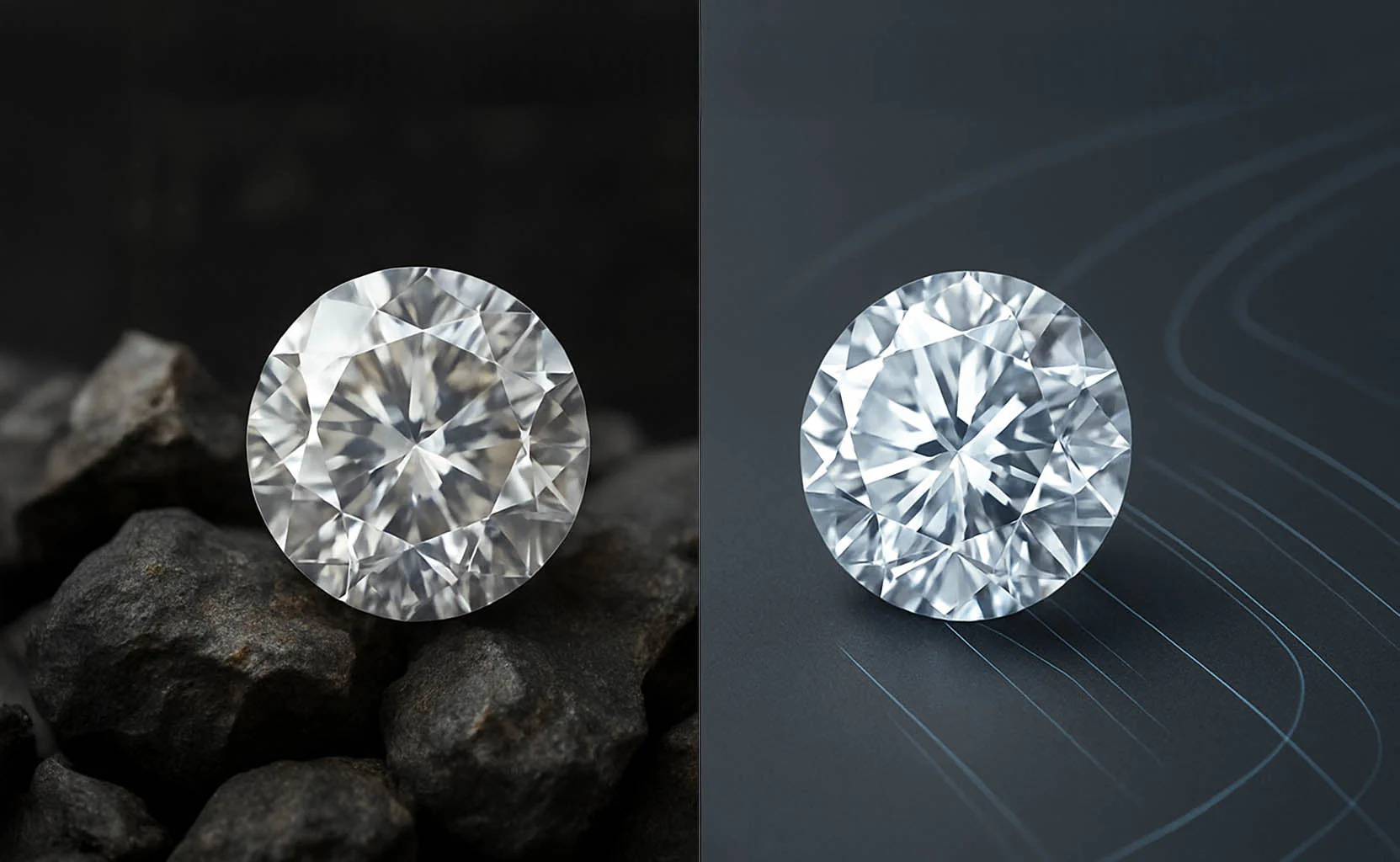
Lab Diamonds vs. Natural Diamonds: What’s the Real Difference?
Diamonds have always symbolized luxury, commitment, and timeless beauty. But as technology advances and consumer preferences evolve, a new choice has emerged in the jewelry world: lab-grown diamonds. While both lab diamonds and natural diamonds look nearly identical to the naked eye, they differ in origin, price, environmental impact, and emotional value. Understanding these differences can help you choose the diamond that truly fits your style, values, and budget.
To start with, both lab diamonds and natural diamonds are real diamonds. They share the same chemical composition—pure carbon—and the same physical and optical properties. They sparkle the same, test the same on diamond testers, and qualify for the same certifications. The primary difference lies not in what they are, but in how they are created. Natural diamonds are formed deep within the Earth’s mantle over billions of years through extreme heat and pressure. They are then brought closer to the surface through volcanic activity before being mined. Lab diamonds, however, are created in high-tech laboratories using advanced methods that replicate the natural diamond-growing environment. This process takes a matter of weeks rather than millions of years.
When it comes to price, lab-grown diamonds are significantly more affordable. On average, they cost 40%–70% less than natural diamonds of comparable size and quality. This price difference doesn’t reflect lower quality; instead, it reflects the modern efficiency of production and supply. For buyers who want a larger stone or a more impressive piece without stretching their budget, lab diamonds offer exceptional value.
Ethics and sustainability are also major factors. Many consumers prefer lab diamonds because they avoid the environmental challenges associated with mining and the ethical concerns that historically surrounded natural diamond sourcing. While today’s leading natural diamond suppliers follow strict ethical standards, lab diamonds still appeal to those who want the most environmentally conscious choice.
However, natural diamonds carry a sense of rarity and emotional heritage that lab diamonds cannot replicate. For some, the idea of owning a gem that formed over billions of years makes the piece more meaningful. Natural diamonds also tend to maintain their long-term market value more strongly than lab diamonds, which have experienced price drops due to increasing supply and advancing technology.
Visually, most people cannot tell the difference between natural and lab-grown diamonds without specialized equipment. Both can achieve excellent color, clarity, and brilliance. Ultimately, your choice should depend on what matters most to you—whether it’s price, sustainability, symbolism, or long-term value.
In the end, both options offer stunning beauty and long-lasting durability. Whether you choose a lab diamond for its modern appeal and cost-efficiency or a natural diamond for its rarity and timeless story, the most important part is selecting a piece that reflects your personal style and carries meaning for years to come.
View Abdullah Sakkijha Jewelry’s latest collections and pieces: https://abdullahsakkijha.com/
Visit us: Swefieh, Al-Hamra Street – Amman, Jordan
Follow us on our socials:
Instagram | Facebook |Snapchat | TikTok | YouTube





Add comment